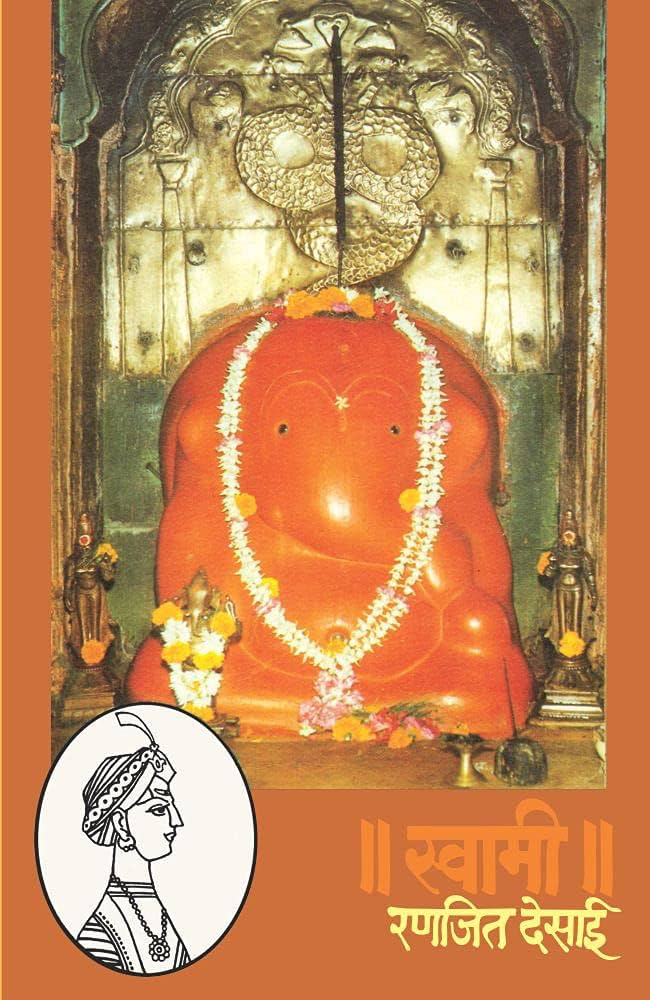
- Number Of Pages: 418 Pages
- Genre Of Book: Historical Fiction / Biography
- Literature: Marathi Literature
- Published On: August 1962
- Awards: Sahitya Akademi Award (1964) for Marathi Literature, Maharashtra State Award
“राज्य करणं म्हणजे फक्त सिंहासनावर बसणं नव्हे; ती एक जबाबदारी आहे जी प्रत्येक क्षणी न्याय, धैर्य आणि त्यागाची मागणी करते.”
“Ruling is not merely about sitting on the throne; it’s a responsibility that demands justice, courage, and sacrifice at every moment.”
“स्वामी, तुमचं आयुष्य हेच माझं सर्वस्व आहे. तुमच्याशिवाय माझं अस्तित्वच नाही.”
“Swami, your life is my everything. Without you, I have no existence.”
“राघोबादादाचं वागणं म्हणजे घरातल्या माणसानेच घर पेटवण्यासारखं आहे.”
“Raghobadada’s actions are akin to a family member setting the house on fire.”
“रामाबाईच्या डोळ्यांतून वाहणाऱ्या अश्रूंमध्ये संपूर्ण आयुष्याची वेदना सामावलेली होती.”
“The tears flowing from Ramabai’s eyes encompassed the pain of an entire lifetime.”
This is the second book I’ve read by the Marathi author Ranjit Desai. The first was the legendary Shriman Yogi, which had already set the bar incredibly high for me. I feel I should have read Swami before Shriman Yogi, since the Shriman Yogi heightened my expectations so much. But that said, Swami still managed to create a special place in my heart and for several reasons.
Interestingly, this is the book that gave Ranjit Desai his identity as a renowned author, and it holds a very special place in his literary journey. It’s shorter than Shriman Yogi, and I finished it in just two days, completely absorbed in its world.
One of the biggest reasons this book resonated with me is because it is mostly set in Theur. Theur is a village that played an important role in my own life. I completed my high schooling there and have always felt a deep connection with Chintamani, the deity of Theur. I read about places I’ve walked through. Temples where I’ve prayed gave this novel a deeply personal and spiritual layer for me.
The second reason, of course, is Ranjit Desai’s immersive writing. His storytelling doesn’t just inform,it transports you to that era.The way he captures emotions, political dynamics, and intimate relationships is absolutely masterful.
Swami is a biographical novel based on the life of Shrimant Madhavrao Bhat I (1745–1772), the 9th Peshwa of the Maratha Empire. He was the second son of Peshwa Nanasaheb (Balaji Baji Rao) and the grandson of the famous Bajirao I. Madhavrao taken power at the young age of 16, post Marathas’ devastating loss at the Third Battle of Panipat.
What stands out is how, despite his young age, Madhavrao ruled with immense wisdom, maturity, and strength. In just nine years of leadership, he managed to rebuild a fractured empire, win the loyalty of his people, and leave a legacy that still inspires.
The novel beautifully explores Madhavrao’s relationships with three important people in his life:
Gopikabai (His Mother): A commanding figure, her presence feels large throughout the novel. Her controlling nature and expectations often create emotional tension in Madhavrao’s personal life.
Ramabai (His Wife): Their bond is portrayed with immense tenderness. Ramabai’s love, silent support, and her final sacrifice make her story one of the most emotional parts of the book.
Raghoba Dada (His Uncle): The most complex character in the novel, Raghoba Dada is both a mentor and a rival. Initially, he steps aside to allow Madhavrao to rule. However, his ambitions to reclaim power create political and personal turbulence. Madhavrao has to manage this with great care.
The friction between duty and affection and power and family plays out so realistically. You often forget you’re reading historical fiction. It feels more like witnessing a living, breathing past.
The most heartbreaking part of the novel comes toward the end, as Madhavrao battles tuberculosis. The description of his physical and emotional pain is heart-wrenching. His transformation starts with him as a calm and composed leader. He becomes someone consumed by pain. The narrative captures his change with such sensitivity that it’s impossible not to be moved.
His last days at the Chintamani Temple in Theur were profoundly spiritual. Continuous Abhishek rituals were performed as he lay dying. These days are among the most soul-stirring passages I’ve ever read. The imagery of him gazing at Lord Chintamani, drawing in divine energy with his eyes as his soul quietly departs, will stay with me forever.
And just when you think your heart can’t take more, the book ends with Ramabai’s decision to commit Sati. Despite everyone’s attempts to convince her, she remains firm in her decision to follow her husband in death. It is a moment of tragic beauty, and I couldn’t stop myself from sobbing as I read those final pages.
Swami is not just a book, it’s a journey. It provides a detailed exploration of one of Maharashtra’s most revered leaders. It’s also an emotional exploration of human relationships. The narrative delves into political struggles and personal sacrifice.
If you have an interest in Maratha history, Pune’s cultural legacy, or simply love well-written, emotionally rich historical fiction, this book is a must-read.
It left me with a lump in my throat and characters that stayed with me for days. Madhavrao and Ramabai now live in a quiet corner of my heart forever.
FAQ:
Q1: What is Swami about?
Swami is a historical novel depicting the life, leadership, and struggles of Madhavrao Peshwa, highlighting 18th-century Maratha politics and society.
Q2: Who wrote Swami?
Ranjit Desai, a renowned Marathi author known for his historical novels and meticulous storytelling.
Q3: What are the main themes of the book?
Leadership, duty, loyalty, sacrifice, political intrigue, historical legacy, and cultural heritage.
Q4: Who are the main characters?
Madhavrao Peshwa (the protagonist), his family, allies, and adversaries shaping the Maratha empire.
Q5: Why should one read Swami?
It provides insight into Maratha history, Madhavrao’s governance, and personal life, blending factual history with engaging narrative storytelling.
Q6: Is the book suitable for all readers?
Ideal for history enthusiasts, readers of Marathi literature, and those interested in leadership and historical legacy.
Q7: What makes Swami stand out from other historical novels?
Ranjit Desai’s attention to historical accuracy, deep characterization, and ability to humanize historical figures makes the book both educational and emotionally engaging.

Ranjit Ramchandra Desai (8 April 1928 – 6 March 1992) was an Indian Marathi-languagewriter from Maharashtra, India. He is best known for his historical novels Swami and Shriman Yogi. He was awarded the Sahitya Akademi Award in 1964 and the Padma Shriin 1973.

Your perspective matters! Please share it with me in the comments.