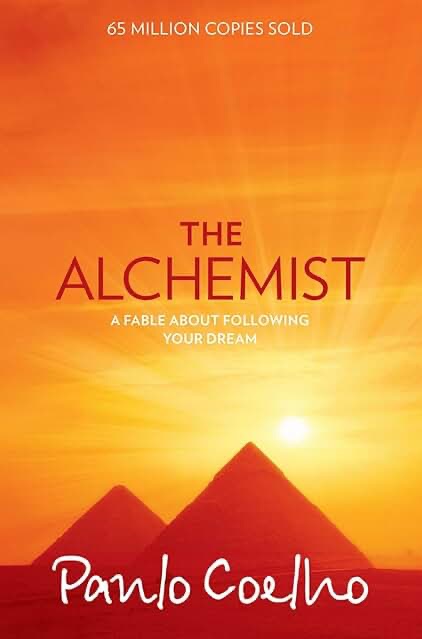
- Number Of Pages: 208 Pages
- Genre Of Book: fiction, adventure, philosophical fiction, and spirituality genres
- Published On: 1988
- Awards: Crystal Award from the World Economic Forum (1999), Golden Book Award from Yugoslavia (2000).
“When you want something, all the universe conspires in helping you to achieve it.”
“The secret of happiness is to see all the marvels of the world, and never to forget the drops of oil on the spoon.”
“It’s the possibility of having a dream come true that makes life interesting.”
“People learn, at least, to begin learning the moment they are ready.”
“The simple things are also the most extraordinary things, and only the wise can see them.”
“Tell your heart that the fear of suffering is worse than the suffering itself. And that no heart has ever suffered when it goes in search of its dreams.”
“Remember that wherever your heart is, there you will find your treasure.”
“Don’t give in to your fears. If you do, you won’t be able to talk to your heart.”
There’s no way you can call yourself a fan of Paulo Coelho and not have read The Alchemist. It’s one of those rare books that’s both simple and deeply philosophical,and it’s no wonder that it found its way into popular culture, including the iconic dialogue from Shah Rukh Khan’s Om Shanti Om movie:
When you want something, all the universe conspires in helping you to achieve it.
Tweet
The Alchemist explores the journey of a young shepherd named Santiago, who starts his journey in search of his Personal Legend – a concept that represents one’s true calling or life’s purpose. His quest to discover a personal legend becomes a profound spiritual journey marked by signs, omens, challenges, and life-changing encounters. Along the way, Santiago meets several characters like a king, a crystal merchant, an Englishman, and an alchemist, each teaching him valuable life lessons.
Here are those pieces of wisdoms that contributed to bring him more closer to his purpose of life.
1. The King (Melchizedek) : Listening to Your Heart & Pursuing Your “Personal Legend”
The mysterious king of Salem who appears at beginning in Santiago’s journey. He teaches him a key lesson that every person has a Personal Legend, a destiny they are meant to fulfill. Melchizedek encourages Santiago to pursue his dream and introduces the idea that when you truly want something, the universe conspires in helping you achieve it. You just needs to have faith in your dreams. Often, the first step toward your goal is the hardest, but it’s also the most crucial.
2. The Crystal Merchant : The Cost of Fear & Comfort Zones
A struggling shopkeeper who once had dreams of going to Mecca but never pursued them. Fear of failure and the lure of comfort can hold people back from achieving their dreams. The merchant teaches Santiago that regret often comes not from trying and failing, but from never trying at all. In life ,don’t let fear paralyze you because dreams delayed can become dreams denied.
3. The Englishman: The Power of Knowledge & Book Learning, the piece, I am absolutely in love with.
A scholarly traveler searching for the secrets of alchemy through books. He emphasizes the importance of study, theory, and intellectual pursuit. However, his journey differs with Santiago’s intuitive, experiential path. We all know that knowledge is valuable, but true understanding often comes through experience, not just theory. A balance between learning and living is very important.
4. The Alchemist: Trust, Transformation & Listening to the Soul of the World
A wise and mystical figure who helps Santiago realize his inner power. The key lesson, he teaches to Santiago that true alchemy is not just turning metal into gold,it’s about personal transformation. He teaches Santiago to listen to his heart, to trust the signs from the universe (omens), and to recognize that the treasure he seeks is not always material. The journey shapes you more than the destination and real treasure lies in self-discovery, courage, and alignment with your inner truth.
Through the journey of Santiago, I reminded myself that dreams are worth pursuing. Fear is the biggest barrier to growth. Learning is important, but it must be combined with action and true transformation happens within.
Each character in The Alchemist reflects a part of ourselves,the dreamer, the fearful, the intellectual, and the wise. Santiago’s journey becomes a mirror to our own life path and keeps on challenging us to ask throughout that journey that “Are we following our Personal Legend?”
What makes the book so powerful is its core message that our dreams are valid, and if we pursue them with sincerity, the universe aligns itself to help us. Though the book is relatively short, it leaves a lasting impact, inspiring readers to reflect on their own dreams and the path they’re on.
In a world full of distractions, The Alchemist is a reminder to listen to your heart, trust the journey, and never stop believing in your dreams.
#booklover ❤️❤️
FAQ:
Q1: What is The Alchemist about?
It’s an allegorical novel following Santiago, a young shepherd, on his journey to discover his personal legend, teaching lessons about dreams, courage, and destiny.
Q2: Who wrote The Alchemist?
Paulo Coelho, a bestselling Brazilian author known for philosophical and inspirational fiction.
Q3: What are the main themes of the book?
Personal dreams, destiny, self-discovery, perseverance, spirituality, and the interconnectedness of life.
Q4: Who are the main characters?
Santiago, the Alchemist, Fatima, the crystal merchant, and other symbolic characters guiding Santiago’s journey.
Q5: Why should one read The Alchemist?
It inspires readers to pursue their personal dreams, embrace life’s journey, and discover deeper meaning in their experiences.
Q6: Is the book suitable for all readers?
Yes, it’s ideal for young adults, adults, and anyone seeking motivation, inspiration, or philosophical insights.
Q7: How is the writing style of Paulo Coelho in this book?
Simple, poetic, and philosophical, making life lessons easy to understand and relatable.
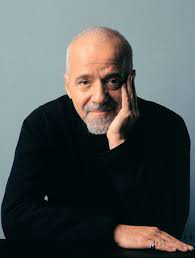
Paulo Coelho de Souza (/ˈkwɛl.juː, kuˈɛl.juː,-joʊ/KWEL-yoo, koo-EL-yoo, -yoh,Portuguese: [ˈpawlu kuˈeʎu]; born 24 August 1947) is a Brazilian lyricist and novelist and a member of the Brazilian Academy of Letterssince 2002. His 1988 novel The Alchemist became an international best-seller.
In 1982, Coelho published his first book, Hell Archives, which failed to make a substantial impact.In 1986 he contributed to the Practical Manual of Vampirism, although he later tried to take it off the shelves since he considered it “of bad quality.”After making the pilgrimage to Santiago de Compostela in 1986, Coelho wrote The Pilgrimage, published in 1987.
While trying to overcome his procrastination about launching his writing career, Coelho decided, “If I see a white feather today, that is a sign that God is giving me that I have to write a new book.” Seeing one in the window of a shop, he began writing that day.The following year, Coelho wrote The Alchemistand published it through a small Brazilian publishing house that made an initial print run of 900 copies and decided not to reprint it.He subsequently found a bigger publishing house, and with the publication of his next book Brida, The Alchemist took off. HarperCollins decided to publish the book in 1994. Later it became an international bestseller.In a 2009 interview with the Syrian Forward Magazine, Coelho stated that the Sufi tradition had been an influence on him, particularly when writing The Alchemistand later The Zahir.
Since the publication of The Alchemist, Coelho has generally written at least one novel every two years. Four of them – The Pilgrimage, Hippie, The Valkyries and Aleph– are autobiographical, while the majority of the rest are broadly fictional.Other books, like Maktub, The Manual of the Warrior of Light and Like the Flowing River, are collections of essays, newspaper columns, or selected teachings. His work has been published in more than 170 countries and translated into eighty-three languages. Together, his books have sold 320 million copies.On 22 December 2016, Coelho was listed by UK-based company Richtopia at number 2 in the list of 200 most influential contemporary authors.

Your perspective matters! Please share it with me in the comments.