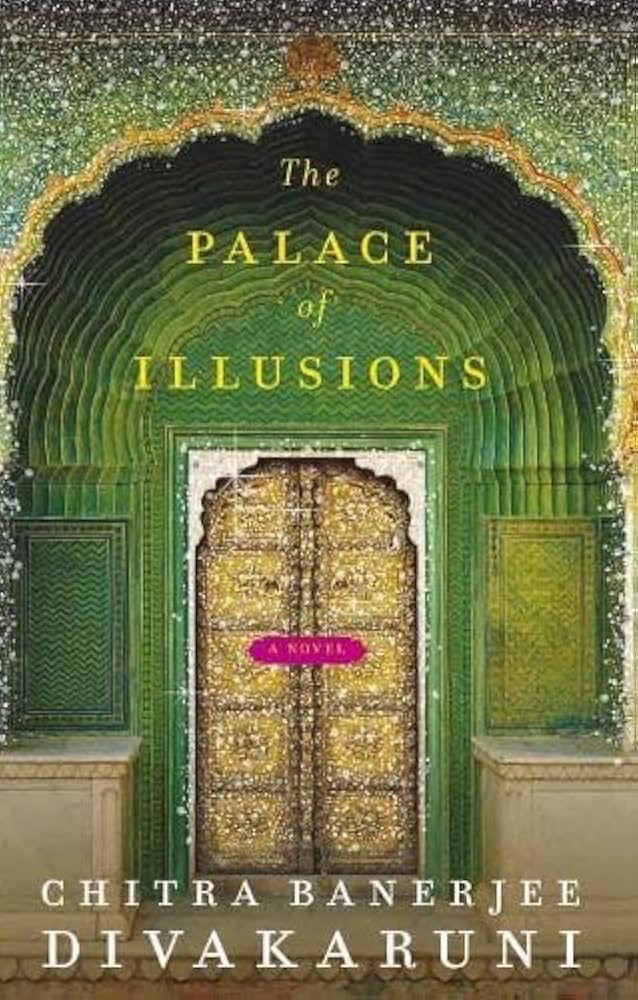
- Number Of Pages: 352 Pages
- Genre Of Book: Historical Fiction
- Published On: September 9, 2008.
- Awards & Recognition:
The 2009 Indian Summer Book Award,
Finalist for the 2008/2009 The Puddly Award and
Top Ten Books of 2008 by The San Francisco Chronicle
“When you are cursed with beauty, you learn early on that it has its own consequences.”
“I have learned that you can’t rely on anyone but yourself, that you cannot change your fate, only how you deal with it.”
“I used to think that nothing in the world could take away my pride, but the gods have a way of changing everything.”
“Sometimes, I think the worst thing about being a woman is that you have to carry the weight of the world’s expectations, as well as your own.”
“To be a woman is to be torn between two worlds—one that defines you as a servant, and another that calls you to be your own person.”
“Fate is a strange and unpredictable thing. It may seem like it’s against you, but in the end, it leads you to where you are meant to be.”
“In every woman there is a warrior, waiting for the right moment to rise.”
There are moments in life when coincidences feel so aligned that they seem orchestrated by fate or by our ever-eavesdropping devices. Just days after my visit to the majestic City Palace in Jaipur, a book recommendation appeared on my google: The Palace of Illusions by Chitra Banerjee Divakaruni. The cover itself is rich, , and inspired by the architectural grandeur of Jaipur felt like a continuation of the journey I had just taken. Immediately , I ordered the Kindle version and began reading. What followed was a deeply immersive experience that gave new life to a story I thought I already knew.
Growing up in India, the tales of the Mahabharata were everywhere on television, in school textbooks, and in novels. These stories were deeply integrated in our cultural consciousness, with heroes and gods occupying an admiration beyond questioning. As we grow older and start seeing the world with more understanding, it’s nice to come across stories that leave space for uncertainty and real emotions.We begin to wonder: What were these mythological figures truly like as individuals? What did they feel, fear, or desire? The Palace of Illusions dares to ask those questions and answers them with grace, depth, and unapologetic honesty.
At the heart of this novel is Draupadi, the fiery and complex heroine of the Mahabharata, retold not as a supporting character in a male-dominated epic, but as the central voice of the narrative. This shift in perspective is not just refreshing it’s revolutionary. Through Draupadi’s eyes, we are led into a world of grandeur and power, but also of loneliness, longing, and emotional turmoil. She is not just a princess or a queen; she is a woman who dares to question her destiny, challenge tradition, and speak her truth.
One of the most compelling aspects of the book is how it humanizes its characters. Divakaruni skillfully peels away the layers of myth and divinity to reveal the vulnerabilities and contradictions beneath. The Pandavas are no longer just morally perfect human beings; they are brothers with conflicting desires, torn loyalties, and silent resentments. Kunti is not merely the wise and intelligent older woman but a woman grappling with the burden of her past and the complexities of her choices. And Krishna playful, divine, and mysterious is portrayed as Draupadi’s spiritual anchor, their bond filled with an unspoken understanding that goes beyond words.
The relationship dynamics in the book are perhaps its greatest strength. The nuanced portrayal of Draupadi and Krishna’s connection is deeply moving. Their friendship, laced with affection, respect, and a rare emotional intimacy, becomes a pillar of strength for Draupadi throughout her tumultuous life. Similarly, the tension between Draupadi and Kunti is explored with subtlety, capturing the generational and emotional friction that is still relevant in many modern Indian households. The portrayal is so real, it feels like eavesdropping on the quiet conflicts and unspoken emotions of everyday life.
As someone who values character-driven storytelling, I found myself especially appreciative of the author’s decision to resist idolizing her characters. Too often, mythological retellings fall into the trap of reducing complex personalities to moral symbols. But Divakaruni does the opposite,she allows her characters to be flawed. And in doing so, she brings them closer to us.
It’s not just Draupadi’s story,it’s a reminder of the silenced voices in history, of women whose strength lies not just in their resilience, but in their right to be heard.This book is a must-read not only for lovers of mythology but for anyone seeking stories of empowered femininity, emotional complexity, and reimagined heritage. It’s a tribute to the idea that legends, no matter how ancient, can still speak to the modern soul,especially when told from a perspective that has too often been forgotten.
#booklover ❤️❤️
FAQ:
Q1: What is The Palace of Illusions about?
It’s a retelling of the Mahabharata from Draupadi’s perspective, exploring her emotions, struggles, and role in the epic events.
Q2: Who wrote The Palace of Illusions?
Chitra Banerjee Divakaruni, an acclaimed Indian-American author known for blending mythology with contemporary storytelling.
Q3: What are the main themes of the book?
Feminism, power, destiny, love, betrayal, morality, and the female perspective on epic events.
Q4: Who are the main characters?
Draupadi (Panchaali), the Pandavas, Krishna, Karna, Duryodhana, and other key figures from the Mahabharata.
Q5: Why should one read The Palace of Illusions?
It provides a fresh, feminist perspective on the Mahabharata, adding emotional depth to Draupadi’s character and giving readers a new way to experience the epic.
Q6: Is the book suitable for all readers?
Yes, especially for those interested in mythology, Indian epics, feminist retellings, and character-driven stories.
Q7: Does the story stay true to the Mahabharata?
While inspired by the Mahabharata, the novel creatively retells the story from Draupadi’s point of view with added personal emotions and interpretations.
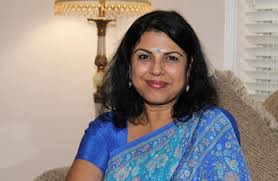
Chitra Banerjee Divakaruni (born Chitralekha Banerjee, 1956[2]) is an Indian-born American author, poet, and the Betty and Gene McDavid Professor of Writing at the University of Houston Creative Writing Program. Her short story collection, Arranged Marriage, won an American Book Award in 1996. Two of her novels (The Mistress of Spices and Sister of My Heart), as well as a short story (The Word Love)were adapted into films.

Your perspective matters! Please share it with me in the comments.