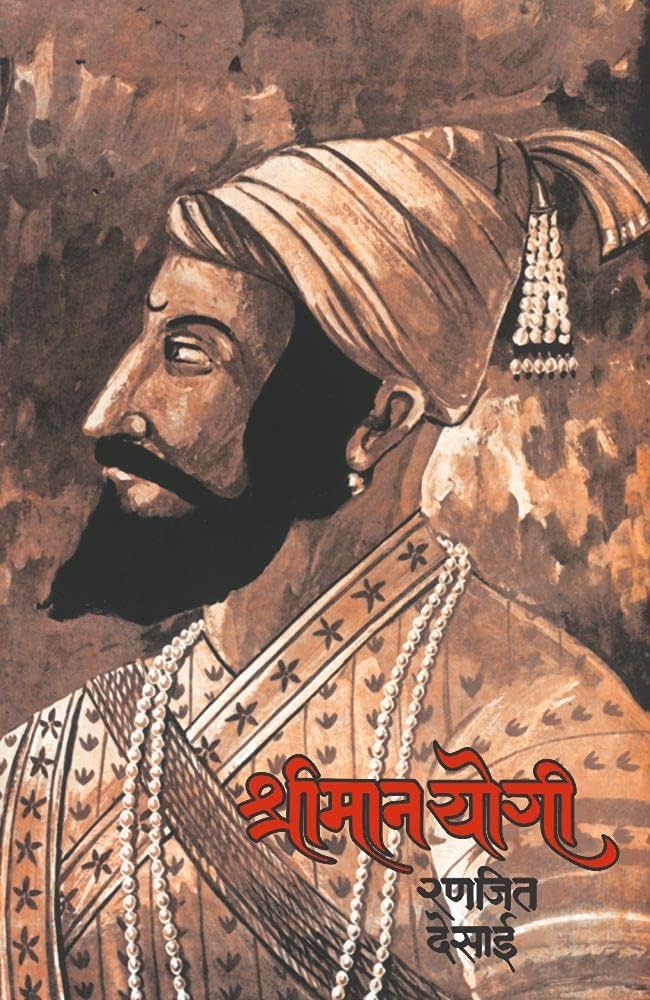
- Number Of Pages: 1132 Pages
- Genre Of Book: Historical Fiction / Biography
- Literature: Marathi Literature
- Published On: 1967
- Awards: Sahitya Akademi Award (1974) for Marathi Literature
“राज्य ही माझी संन्यासाची दोरी आहे.”(The kingdom itself is my path of renunciation.)
“शिवछत्रपती होणं ही कुण्या एका माणसाची नव्हे, तर संपूर्ण जनतेची गरज होती.”(Becoming Chhatrapati Shivaji was not just one man’s destiny, but the necessity of an entire people.)
“स्वातंत्र्य हे भीक म्हणून मागायचं नसतं, ते तलवारीच्या जोरावर मिळवायचं असतं.”(Freedom is not to be begged for; it is to be won by the sword.)
“यश अपयश हे माणसाच्या हाती नसतं, पण प्रयत्न करणं मात्र त्याच्या हाती असतं.”(Success or failure is not in our hands, but making an effort is.)
“एक राजा म्हणजे फक्त सिंहासनावर बसणारा माणूस नसतो, तो आपल्या लोकांचा रक्षक असतो.”(A king is not just someone who sits on a throne; he is the protector of his people.)
“माझे शरीर जरी मातीमोल असेल, तरी स्वराज्य अजरामर राहील.”(Even if my body turns to dust, Swarajya will remain eternal.)
Honestly, I feel like I should write this book review in Marathi, as it is the language of the book. Sometimes, translating something into another language dilutes its emotions and essence. However, I must admit ,though a bit embarrassed that I lost the command when it comes to writing in Marathi. So, I’ll be sharing this review in English instead.
For those unfamiliar with Marathi literature, the book Shriman Yogi is about one of the greatest rulers of the Maratha Empire and the ruler I am talking about here, is Chhatrapati Shivaji Raje Bhosale. Over 350 years ago, he built his own kingdom while upholding religious harmony. This book is among the most celebrated in India, blending historical depth with emotions and powerful storytelling.
My review might be as lengthy as the book itself deserves after all, this isn’t just any story. It’s the biography of an emperor so revered that he is considered no less than a divine figure, an Aaradhya Daivat (a deity of devotion). Shivaji Maharaj was a visionary leader and a fearless warrior whose legacy is not just a part of history but a guiding light for generations. Reading this book is not just about understanding history; it’s about learning wisdom from his experiences and actions.
The Introduction:
I usually read introductions at the end perhaps because I prefer to dive straight into the story or avoid forming preconceived notions. But for this book, I made an exception. A friend of mine highly praised the introduction, and after reading it, I completely echoed his sentiments.
The introduction is a letter written by author Ranjit Desai to himself, reflecting on the immense responsibility of writing about such a legendary figure. This not only adds to the novel’s credibility but also adds depth to the narrative. However, one thought linger in mind that I wish more contemporary records from that era had been preserved. It would have been fascinating to have firsthand historical accounts.
The Book’s Structure:
The book is divided into 11 parts, each offering insight into the major phases of Shivaji Maharaj’s life. There were moments that made me pause, overwhelmed by awe, thinking, How could one person embody such greatness?
Here are some key highlights from the book:
1. Birth and Childhood:
Shivaji Raje was born to Shahaji Raje Bhosale and Jijabai on February 19, 1630, at Shivneri Fort. His childhood wasn’t just about royal privileges, it was about discipline, values, and vision. His mother’s teachings, mentor Dadoji Konddev’s training, and his own determination led him toward Swarajya (self-rule).
2. Formation of the Maratha Army:
In this part, the focus is on Shivaji Maharaj’s strategic efforts to build a loyal army, emphasizing his leadership qualities and the initial challenges he faced in uniting the Maratha warriors.
Two incidents deeply captivated my mind, showcasing the unwavering courage and righteousness of Shivaji Maharaj. At just 15 years old, he made a bold decision, he refused to use Sikka(seal/stamp) in Persian, a practice that had been followed unquestioningly from long time.He created his seal in Sanskrit, becoming the first Jahagirdar to take such a stand. This act wasn’t just about language; it was a declaration of identity, a silent yet powerful resistance against foreign dominance.
The second incident reflects his unshakable commitment to justice. When he learned of a heinous crime committed against women by a Ranje Patil, a man with strong connections in high places, Shivaji Maharaj did not bend to influence or pressure. Without hesitation, he ensured that the wrongdoer faced the consequences, ordering his hands and feet to be cut off. Such an act of justice struck fear in the hearts of oppressors and strengthened the faith of his rayat (people). It was this fearless resolve that made him not just a ruler, but a guardian of his people, earning their trust and devotion.
3. Victory at Torna Fort – The Beginning of Swarajya:
At just 16, Shivaji captured Torna Fort, marking the first step toward Swarajya. By the age of 20, he had already laid the foundation of the Maratha Empire. His ability to unite people, win forts, and challenge powerful rulers at such a young age is just extraordinary. His strategic brilliance and determination awestruck me time to time.
4. Conflict with the Adil Shahi Sultanate:
This section explores Shivaji Raje’s confrontations with the Bijapur Sultanate. It details significant battles and his diplomatic tactics to protect and expand his territory.
Establishment of the Navy: This section focuses on Shivaji Maharaj’s vision in creating a naval force. It covers his efforts to protect the Maratha coastline Konkan. Today, many regard him as the “Father of the Indian Navy.” This is because of his pioneering efforts in establishing a marine force in the 17th century.
5. The Killing of Afzal Khan:
This was a defining moment in his fight for independence. Afzal Khan, a powerful general of the Adilshahi Sultanate, planned to assassinate Shivaji Raje, carrying army of 12000 soldiers. This was something had happened just after he lost his beloved wife Saibai. However, instead of spending time in the greif, he used his intelligence and strategy and turned the tables, killing Afzal Khan at Pratapgad Fort and crushing his 12000 of Army by gurilla war tactics.
6. Attack on ShaistaKhan:
Aurangzeb sent Shaista Khan to bring down Shivaji’s uprising. Shivaji Raje launched a daring raid with just 400 soldiers on Shaista Khan’s palace in Pune, who was surrounded by an Army of 1 lakh soldiers. He left him wounded by cutting his 3 fingers.
One touching instance in this part truly showcased Shivaji Raje’s compassion. When his beloved horse, Vishwas, fell ill, Shivaji Raje refused to eat dinner and sat beside him until he recovered at midnight. This same leader, who had once ordered the punishment of a Patil for committing a heinous crime against a woman, also had a deeply compassionate heart.
7. The Plundering of Surat :
To replenish his treasury, Shivaji raided Surat, a wealthy Mughal trade center. This move shocked Aurangzeb and cemented Shivaji’s reputation as a formidable force.
Purandar Treaty: One of the most profound moments in the book was the Treaty of Purandar. Shivaji Raje had to surrender 23 out of 35 forts, retaining only 12. Why? Because Aurangzeb send one Hindu powerful leader Mirza Raje Jaisingh along with Dilerkhan of 1 lakh army to finish Shivaji Maharaj’s swarajya. Both of these powerful leader created lot of chaos in his swarajya and ultimately in order to save swarajya he had to agree to this treaty. But instead of feeling defeated, he viewed it as a temporary setback and he believed that we will for sure take these forts back. However, what truly broke my heart was the meeting arrangements made by Mirza Raje Jaisingh who was serving to Aurangzeb as a commander.The meeting tent was arranged in a way that Shivaji Raje could witness one of his forts Purandar fort being brutally attacked during treaty negotiations.You could feel his pain while reading that portion. It must have been very painful to witness those massive cannons firing explosive shells upon Purandar Fort, with the fort’s bastions collapsing one after another right before his eyes.
8. Escape from Agra:
Captured by Aurangzeb in Agra, Shivaji orchestrated a daring escape hidden inside fruit baskets. He returned to Swarajya and rebuilt his empire, proving that resilience and strategy were his greatest weapons.
Destruction of Temples: In 1669, Aurangzeb ordered the demolition of the Kashi Vishwanath Temple in Varanasi. A mosque, known as the Gyanvapi Mosque, was constructed on its site. Similarly, the Kesava Deo Temple in Mathura, a significant site associated with Lord Krishna, was destroyed under Aurangzeb’s orders, and the Shahi Eidgah Mosque was built in its place. In 1679, Aurangzeb reinstated the Jizya tax on non-Muslims, which had been abolished by his predecessor, Akbar. However,the jizya tax significantly affected Hindus by imposing economic hardships, reinforcing social hierarchies, prompting forced religious conversions, and inciting resistance against perceived injustices. This just gives a taste of Aurangzeb’s cruelty and motive to obliterate Hindu religion.
And , now you understand why he deserved to be worshipped not only in Maharashtra but in whole India. If he wouldn’t have been there then we might not be worshipping the gods we do today, as he played a crucial role in protecting the Hindu religion.
9. Shivaji Raje’s Coronation as Chatrapati:
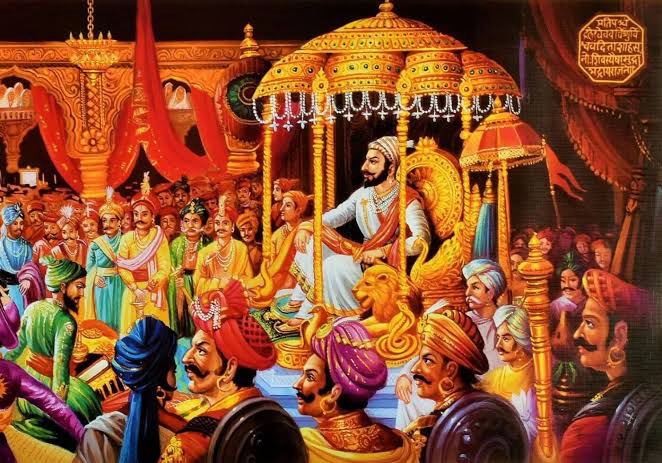
In 1674, Shivaji Raje was formally crowned Chhatrapati of the Maratha Empire, realizing the dream of Swarajya. This moment was not just a political victory, it was sheer example of achieving success through continuous effort and determination, even when facing challenges or setbacks.
This part is so beautifully described that you feel like you are sitting in that ceremony and watching all of it happening in front of your eyes. What a surreal experience it would have been?
10. Southern Conquests:
Shivaji Maharaj expanded his empire into South India, defeating the Adilshahi and Qutb Shahi rulers and establishing Maratha dominance.
11. Personal Life and Challenges: This part provides insights into Shivaji Maharaj’s personal life, his relationships with family members, and the challenges he faced balancing personal and political responsibilities. This part was very painful to read because you feel why someone like him has to suffer all of this. Despite internal betrayals and declining health, Shivaji Maharaj continued strengthening Swarajya. In 1680, he passed away, leaving behind an unshakable legacy.
Final Thoughts:
Shriman Yogi beautifully captures all colours of Shivaji Maharaj’s personality his bravery, strategic brilliance, visionary leadership, compassion and deep devotion to Swarajya. Through every page, you experience the determination of a warrior, the wisdom of a ruler, the compassion of a leader, and the spirit of a true king. He is not just a historical figure but a living philosophy of self-rule, cultural affirmation, and commitment to justice and equality. And , this book is not just a historical novel it is an immortal tribute to one of India’s greatest heroes.
I know this review has been long, but I couldn’t stop pouring my heart out. Before I conclude, I have one last question: Have you ever wondered why the book is titled Shriman Yogi?
I certainly did. The answer lies in history one of Maharashtra’s greatest saints, Samarth Ramdas, given this title to Chhatrapati Shivaji Maharaj during their first meeting. It perfectly encapsulates his disciplined leadership, spiritual strength, and unwavering devotion to Swarajya.
I believe this is what makes Chhatrapati Shivaji Maharaj not just a king, but an eternal inspiration. I consider myself fortunate to have been born on the very soil where he laid the foundation of Swarajya.
FAQs:
1. What is Shriman Yogi about?
Shriman Yogi is a historical novel by Ranjit Desai based on the life of Chhatrapati Shivaji Maharaj, tracing his journey from childhood to coronation and his vision of Swarajya built on justice, courage, and leadership.
2. Is Shriman Yogi a true story?
The book is historical fiction, inspired by real events and historical figures, presented through powerful storytelling to convey emotions, values, and the spirit of Shivaji Maharaj’s era.
3. Why is the book titled Shriman Yogi?
The title was given to Shivaji Maharaj by Samarth Ramdas, reflecting his disciplined, spiritual nature and his ability to rule with detachment like a yogi while leading an empire.
4. Is Shriman Yogi worth reading today?
Yes. The book remains highly relevant for its timeless lessons on ethical leadership, resilience, cultural pride, and responsibility toward society.
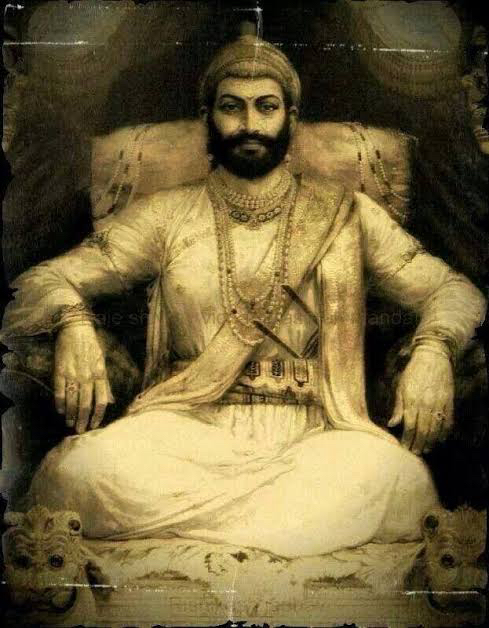


Ranjit Ramchandra Desai (8 April 1928 – 6 March 1992) was an Indian Marathi-languagewriter from Maharashtra, India. He is best known for his historical novels Swami and Shriman Yogi. He was awarded the Sahitya Akademi Award in 1964 and the Padma Shriin 1973.
Euphoric Reads – Inspiring Minds, One Story at a Time
Discover thoughtful book reviews, heartfelt reflections, and soul nourishing insights crafted to help you slow down, reconnect, and grow. Every read is designed to bring clarity, inspiration, and joy into your daily life.
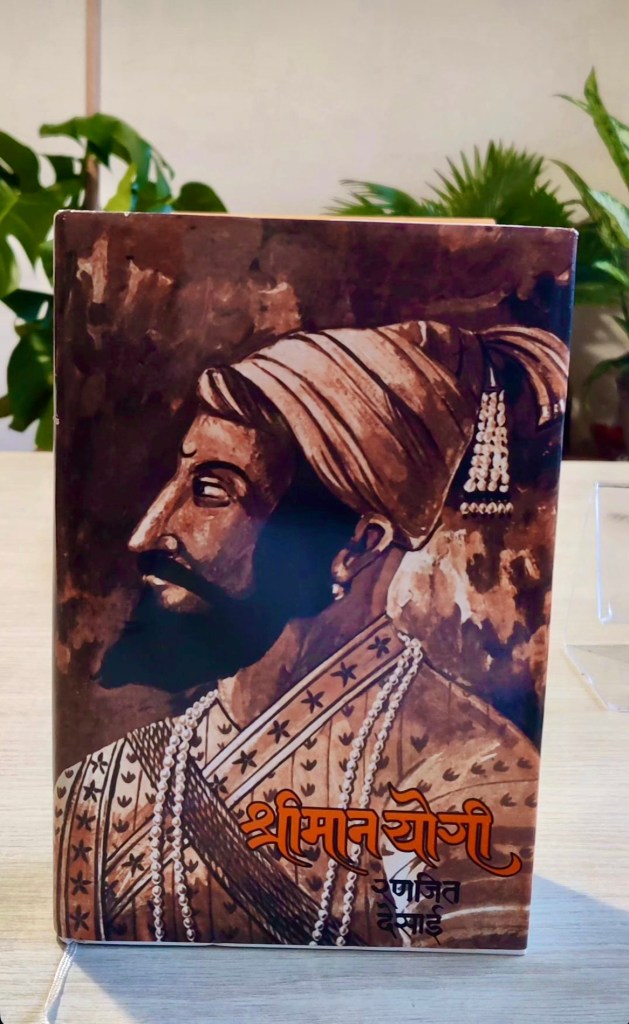
From My Gallery
Other Books from Author



Leave a reply to Euphoric Reads Cancel reply