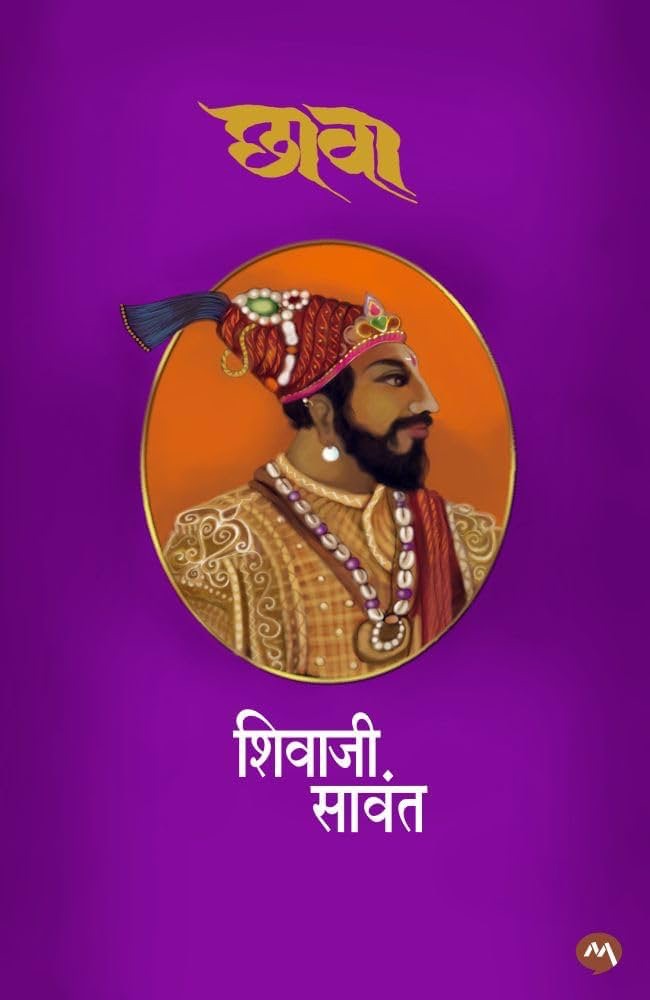
- Number Of Pages: 856 Pages
- Genre Of Book: Historical
- Literature: Marathi Literature
- Published On: 5 March 2019
- Awards: Moortidvi Award(1994), Sahitya Akademi Award(Marathi), Jnanpith Nomination,State Literary Awards(Maharashtra)
“शस्त्र सोडणारा योद्धा आणि सत्य सोडणारा राजा इतिहासात टिकू शकत नाही.”(A warrior who abandons his weapon and a king who abandons the truth cannot endure in history.)
“राजाला फक्त ताकदवान असून चालत नाही, त्याला विद्वानही असावं लागतं.”(A king needs not only strength but also wisdom.)
“पराभव हा शेवट नसतो, तो फक्त पुढच्या विजयासाठीची तयारी असते.”(Defeat is not the end; it is merely preparation for the next victory.)
“आयुष्य कितीही कठीण असलं तरी लढणं थांबवलं, तर ते आयुष्य कसले?”(No matter how difficult life gets, if we stop fighting, is it truly life?)
“राजा हा न्यायासाठीच जन्माला येतो, अन्यायासाठी नाही.”(A king is born to uphold justice, not to perpetrate injustice.)
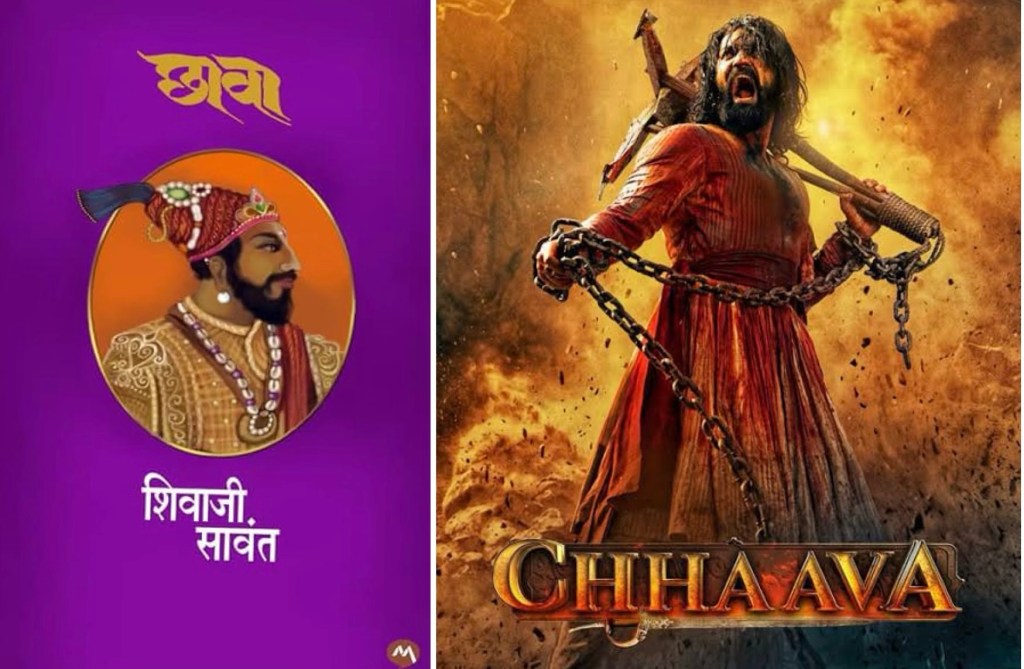
Recently, I watched the trailer of the movie Chhaava, an adaptation of the Marathi novel Chhava of Shivaji Sawant. The trailer instantly inspired me to write a review of the book, which I read around 2010, nearly 14 years ago.It was the second book I read by Author Shivaji Sawant.
To be honest, reading a historical book as lengthy as Chhava (856 pages) wasn’t easy. However, Shivaji Sawant’s fluid and immersive writing made the experience enjoyable. His storytelling is so beautiful that I feel like I’ve already seen the movie in my mind long ago. He brings the characters to life, transporting you to that era and making you feel as if you are living alongside the characters.
As a Marathi, I had learned bits and pieces about Chhatrapati Shivaji Maharaj and Chhatrapati Sambhaji Maharaj during my school years. However, my historical education was mainly focused on Shivaji Maharaj’s greatness,his war strategies and legendary battles. Chhava, on the other hand, took me deep into the life of Sambhaji Maharaj, the first son of Chhatrapati Shivaji Raje Bhosale.
Reading this book was an eye-opening experience, as Sambhaji Maharaj’s greatness is often overshadowed by his father’s, Chhatrapati Shivaji Maharaj’s legacy. He remains one of the most misunderstood rulers of the Maratha Empire. The title Chhava, a Marathi word meaning “cub” is often used to describe the offspring of a lion. It truly symbolizes bravery, courage, and leadership, making it a perfect metaphor for Sambhaji Maharaj’s strength, resilience, and lion-hearted approach to challenges.
The book describes his life, battles, and hardships, offering a very powerful portrayal of his short yet extraordinary 32-year life. I can not resist myself highlighting some of his hardships and strengths with a spoiler alert.
*****Spoiler Alert ******
Born on 14th May 1657 at Purandar Fort, Chhatrapati Sambhaji Maharaj faced immense hardships from a young age. At just two years old, he lost his mother, Saibai, and was raised under the guidance of his grandmother, Jijabai.
At the age of nine, Sambhaji sent as a political hostage in Aurangzeb’s court Agra, a consequence of the Purandar Treaty (1665) between Chhatrapati Shivaji Maharaj and the Mughal Empire. He observed Mughal politics and diplomacies very closely. This experience did help later shaping his future leadership. When Shivaji Maharaj himself was placed under house arrest in Agra (1666), he planned a bold escape along with Samabhaji. Sambhaji was left at Mathura as Shivaji Maharaj wanted to speed up his travel to Swarajya. To mislead Aurangzeb, Shivaji not only spread rumors of Sambhaji’s death but even conducted his post-death Hindu rituals. For over a year, Sambhaji lived in Mathura in secrecy before reuniting with his family.
Even in his youth, Sambhaji displayed remarkable intelligence and military skills. By the age of 13, he had mastered 13 languages, showcasing his sharp intellect. However,certain courtiers saw him as a threat to their influence in Shivaji’s court due to his bold and independent nature. Among them was his stepmother, Soyarabai, who driven by the ambition to place her own son, Rajaram, on the throne. This political intrigue strained his relationship with his father, leading to Shivaji Maharaj’s decision to send him to Panhala Fort for protection at the age of 16,around 1673.
However, Sambhaji saw this not as protection, but as exile. He felt isolated from political and military affairs, misunderstood, and undervalued. This created tensions between father and son fueled by court conspiracies. In 1678, frustrated by his circumstances, Sambhaji temporarily left Swarajya and sought refuge with Aurangzeb. This decision, however, was not one of betrayal but of a warrior struggling to find his place amidst constant manipulation and power struggles.
After Shivaji’s death in 1680, Soyarabai allegedly conspired to crown Rajaram as king, bypassing Sambhaji. However, he thwarted this attempt and claimed the throne for himself, which further soured their relationship. Soyarabai continued plotting to overthrow Sambhaji, possibly collaborating with certain court members and officials.
Aurangzeb launched a massive campaign to conquer the Maratha Empire, dedicating vast resources to it. Sambhaji relentlessly fought 127 battles not only against Mughals but with adversaries like the Portuguese in Goa, the Siddis of Janjira, and the Adilshahi despite having very less resources.
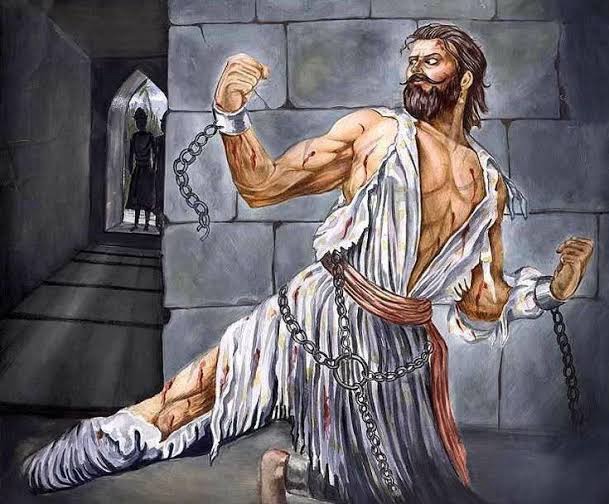
Sambhaji’s life took another tragic turn when he was captured by Mughal forces under the orders of Emperor Aurangzeb. His betrayal came from his brother-in-law, Ganoji Shirke, who sided with the Mughals for personal gains. Sambhaji and his close advisor, Kavi Kalash, were captured unarmed at Sangameshwar. After capture, Aurangzeb conducted inhumane torture to Sambhaji Maharaj over several weeks, demanding him convert to Islam and surrender Maratha Empire. He continuously refused to convert to Islam, declaring his loyalty to Hinduism. His eyes were plucked out, his tongue was cut off , his nails were pulled out, his body was literally cut by piece by piece . He was paraded in chains and humiliated to bring down his spirit. Even under such extreme sufferings,Sambhaji Maharaj remained fearless refusing to all Aurangzeb demands and proved to be a true symbol of bravery and religious devotion.
After enduring 40 days of brutal torture, he was finally killed on 11 March 1689, by tearing him apart from the front and back with wagh nakhe (metal “tiger claws”) and beheading with an axe at Tulapur. Aurangzeb ordered the pieces to be thrown into the on the banks of the Bhima river near Pune to prevent his cremation, knowing the importance of cremation in Hindu culture. His final moments remain one of the most tragic and brutal death episodes in Indian history. Even today, thinking about it fills my heart with sorrow and pain.
FAQ:
Q1: What is Chhava about?
It narrates the life of Chhatrapati Sambhaji Maharaj, focusing on his bravery, leadership, and struggles under the Mughal empire.
Q2: Who wrote Chhava?
Shivaji Sawant, a celebrated Marathi author known for exploring historical and epic figures.
Q3: What are the main themes?
Leadership, bravery, loyalty, sacrifice, justice, and historical struggles against oppression.
Q4: Who are the main characters?
Chhatrapati Sambhaji Maharaj, Shivaji Maharaj, Soyarabai, and other figures from the Maratha empire.
Q5: Why is Chhava important in Marathi literature?
It blends history, heroism, and philosophy, giving an inspiring portrayal of moral dilemmas and leadership.
Q6: Is the book suitable for all readers?
Yes, though knowledge of Maratha history enhances understanding of political and historical context.
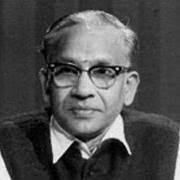
Shivaji Sawant (31 August 1940 – 18 September 2002) was an Indian novelist in the Marathi language. He is known as Mrutyunjaykaar (meaning Author of Mrutyunjay) for writing the famous Marathi novel – Mrutyunjay. He was the first Marathi writer to be awarded with the Moortidevi Award in 1994.
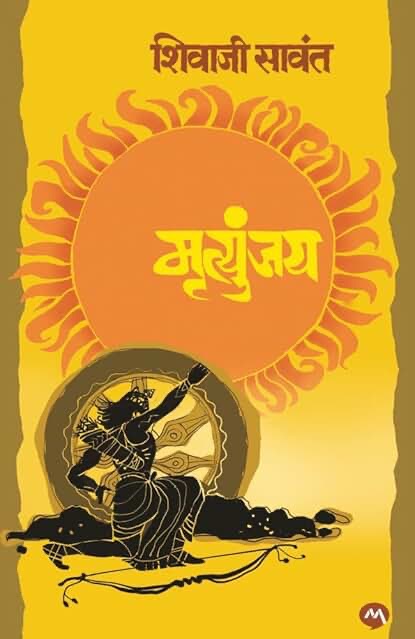
He wrote a book Mrutyunjay (English: Victory Over Death) based on Karna, one of the leading characters of the epic Mahabharat. This book was translated into Hindi (1974), English(1989), Kannada(1990), Gujarati (1991), Malayalam (1995) and received numerous awards and accolades. His novel Chhava, published in 1980, is based on the life of Chhatrapati Sambhaji.
From My Gallery
Other Books from Author


Your perspective matters! Please share it with me in the comments.